You can become a member of BBE either as an organisation or as an individual

Thursday, 18 December, 2025
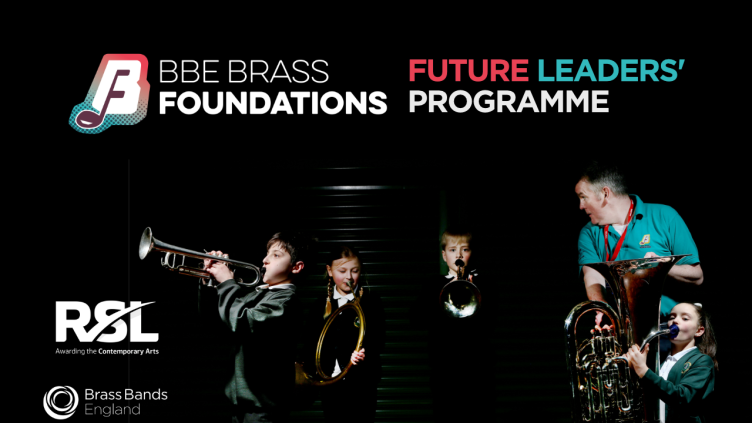
Following an outstanding set of results of the 2025 Brass Foundations Future Leaders’ Programme, Brass Bands England has produced three case studies exploring the impact on the communities and networks of those who participated. Read them below.
Julie Hoggarth - Growing confident community Band Leaders
Julie first became involved in brass bands through her children’s schools’ headteacher, who saw brass banding as a way to support pupils in inner-city schools. Because her own children were learning, Julie was invited to help, and she began working with Wigston Band. Keen to develop her skills early on, she also completed the CT ABRSM.
In 2013, Julie started her own band in the area where she implemented her fervent mission for inclusion in musical ensembles and she experimented with mixed instrumentation and with improvisation as a vehicle for learning but found it pushed players too far out of their comfort zone. Most recently, Julie’s first love for brass has blossomed in her new home in Cumbria.
Goals
Julie joined the Future Leaders’ Programme to strengthen her teaching methods and ground them in a clear, practical framework. She wanted to develop group teaching approaches that would reduce the need for costly private lessons, making music more accessible. Inclusion and accessibility have always been at the heart of her motivation, and she wanted a solid philosophical and methodological foundation to support what had, until then, been largely developed through experience.
Networking with like-minded people was also important as an opportunity to share ideas and values with others who are involved in this important area of community work.
Implementation
For the purposes of the programme, Julie’s main focus was T-Brass, a small group of about six young people that she has worked with for four years in Tebay, Cumbria. T-Brass began during lockdown as an online project following consultation with local bands, and later moved into parish rooms where it has remained a steady presence. She is supported by a teenage helper (who changes over time but is often someone completing Duke of Edinburgh award) and another adult musician.
At the point of enrolling on the course, Julie was particularly unsure about whether her support for neurodivergent learners was appropriate, and whether the children were progressing enough musically as a band. She knew that her own time management would be a challenge and worried about whether she could keep up academically, but she committed to making the time.
The support she valued most came from her mentors, whose encouragement kept her motivated and without whom she feels she may have waivered. Visits to T-Brass by her mentor also showed first hand that the work they were doing there was valued. The workshop weekends were a particular highlight, especially for the network they created. Julie found the theory sessions challenging, but also really insightful, as they gave her the chance to see how others approached tasks and to exchange ideas.
Response and reaction
The contents of the programme made an immediate difference in Julie’s practice. She began using a speaker and backing tracks - something she had resisted before - and found they transformed sessions, making them livelier and easier to run. She also came to value planning much more, learning how to break down learning processes, reflect on them, and share plans with helpers so everyone knew their role.
Over time, Julie introduced new ways of gathering feedback from her learners, injecting youth voice into her planning and delivery, including evaluation methods that gave all the players a stake in the running of the group.
Some aspects of the course were tough, especially when tasks pushed her beyond what she was used to. But she recognised that this resistance was revealing and useful - it held up a mirror to her own teaching style and challenged her to push learners more in the future.
Overall, Julie came away with a sense of pride and a new level of confidence. The course gave her credibility not only in the bandroom but in the wider music education community, which felt vital for making connections beyond her own organisation, particularly when communicating with her local music hub..
Achievements and legacy
For the children and young people: Julie is equipping them with tools to become independent learners. Her long-term aim is to inspire the next generation of facilitators - young people who could one day run their own bands.
For the organisation: Julie has delivered initiatives such as a “Local Heroes” course with six other leaders, all of whom now discuss inclusive practice with a flavour of the Future Leaders’ Programme. Julie ran six solid days of Brass Taster sessions over the summer where former players and T Brass members have returned to form an ensemble, helping to build capacity and strengthen the programme.
For herself: Julie feels she achieved her immediate goals, though she is not one to stay still where learning is concerned. She now goes into sessions with greater confidence, backed by a recognised qualification and a sense of credibility. She is more reflective, more open to change, and more resilient when faced with challenges.
Takeaways and next steps
- What she’s learned: The power of planning and reflection, the value of mentoring and networks, and the importance of embracing change even when it feels uncomfortable.
- Next steps: This year, Julie plans to build on her five ensembles by creating a youth version of Local Heroes, giving young people the skills to lead workshops themselves and inspire more children to play.
- Recommendation: Julie describes the programme as “the best thing that has happened in the brass band world in recent years” and would strongly encourage others in similar situations to take part.
Andrea Lewis - Creative leadership in youth brass
Andrea is the 2nd Baritone player in Porthleven Band in Cornwall and has always been involved in music with children and young people in one way or another. During her time as a primary school teacher, she ran many musical activities, and later began helping the beginner band in Porthleven. As a leader, she has since grown Porthleven's Bandbuilders programme into a four-ensemble entity, which has been running for about eight years. The programme now includes groups for Beginners, Improvers, Performers, and the Rhythm Club.
Goals
Andrea’s main reason for enrolling on the Future Leaders’ Programme was to introduce new ideas to the band sessions - games, activities, and ways of structuring rehearsals - to keep sessions fresh and exciting. The RSL qualification itself wasn’t the driver; that felt more like a bonus that came with the experience.
Implementation
Most of Andrea’s work is with Bandbuilders, where she has supported young players at all stages of their learning. Before the course, her main worry wasn’t so much a lack of skills but how to keep children engaged long enough to stick with playing. Retention, rather than recruitment, felt like the bigger challenge in her situation. Andrea also felt that she wasn’t sure if there were gaps in her provision and that engaging in the programme would let her know if there were.
Signing up to the programme was driven by self-improvement and motivated by the invitation to enroll, published by BBE. She knew travel would be tricky from Cornwall, and the thought of spending weekends with people she didn’t know was a bit daunting. But, Andrea was clear that this was something she wanted to do for herself and the present and future learners in her band.
Response and reaction
The weekends proved hugely valuable, especially the practical sessions. Watching mentors run musical games and activities gave her inspiration she could immediately take back into rehearsals. Andrea felt that all the sessions were really useful and while the written work mattered for the theory side of things, it was the hands-on ideas that really stuck.
One early change that Andrea made was singing in Bandbuilder sessions - bringing in a hello song to start her rehearsals - which she now sometimes uses with BSL and sometimes draws on different languages. This has become a fun and welcoming way to start sessions and concerts and one that also draws on her experience as a primary school teacher, which she had never thought to do. Andrea now finds singing a great tool to identify children’s developing musical skills by internalising sounds. Alongside this, she started using more visual prompts in the bandroom, like instrument pictures, fingering charts and transposition prompts, and began planning sessions with a clearer structure.
Time management around the tasks and assignments was tough at points. It had been some time since Andrea had engaged in a formal qualification and expectations and techniques had moved on a little since her own time at school. Andrea enjoyed the personal mentorship offered through the programme, the encouragement and motivation made it an almost bespoke experience and she also valued the chance to stretch herself and try something new, which for her was in the conducting elective.
Overall, the course shifted the way she runs sessions: they are now more creative, more structured and more engaging for those taking part.
Achievements and legacy
For the children and young people: Sessions are now more fun and welcoming, with plenty of variety to suit different learning styles. Children feel seen and encouraged from the moment they walk in, and Andrea herself feels more confident in her role.
For the band: The organisation benefits from having a stronger foundation for its beginner programme. Sessions are better designed to support children of all abilities and to nurture players as they progress. There’s also more thought about how to keep young musicians motivated as they grow, so they don’t drop out before reaching the senior band.
For herself: Andrea achieved what she set out to do - and got a distinction in the process - finding new ways to structure and energise band sessions. She’s also discovered that the best sessions come when she delivers in her own style, while still drawing inspiration from others.
Looking ahead, Andrea wants to go back to some of the programmes’ tasks that she feels that she could more fully explore with more time, and ultimately, to give Bandbuilders more opportunities to perform.
Would Andrea recommend the Brass Foundations Future Leaders’ Programme? Absolutely. She found it inspiring to meet and learn from great people working with bands, and would encourage anyone in a similar role and situation to give it a go.
Joy White - Leading beginners with confidence
From a young age, Joy’s love of brass playing inspired her to pursue a career in both performance and teaching. After completing a Master’s in Music Performance, she established herself as a peripatetic brass teacher in her local area and became involved with the Lewes, Glynde and Beddington Brass Band (LGB). Invited to help launch a youth band for the organisation, she co-founded Brass Sparks, which has since flourished.
Building on the success of Brass Sparks, Joy then launched a new beginner group, Brass Sparklers. This new group brought together 17 beginners, some with a term of whole-class brass experience in school, and others who had never picked up an instrument before.
Goals
The start of the Future Leaders’ Programme coincided with Joy launching Brass Sparklers. While she already had extensive experience teaching whole-class brass in schools, Joy recognised that leading an out-of-school beginners’ group would require a slightly different approach. In particular, she wanted to develop her skills in pacing, structuring a session, teaching notation to a large group, and managing the energy of a lively group of young players.
Being from a small area with few local brass tutors, a major attraction of the programme for Joy was the opportunity to connect with fellow brass teachers and band leaders. Although Joy had previously participated in numerous professional development sessions, the Future Leaders’ Programme was her first opportunity to engage in training specifically focused on brass teaching.
Implementation
The weekend workshops provided practical ideas and strategies that Joy was able to implement immediately in her sessions. From selecting suitable activities and repertoire to progress learning, to group management across a wide range of ages and abilities.
Joy found the mentor visits invaluable, providing both reassurance that she was on the right track and tailored advice to meet the specific needs of her group.
Over the duration of the course, Joy’s approach to leading Brass Sparklers evolved. She developed a consistent session routine and incorporated a range of behaviour management techniques like sticker rewards and best section prizes to maintain motivation and focus. These were ideas she gained from weekend workshops.
The biggest challenge for Joy was finding time in her already busy schedule to fit the course in, but looking back, she is glad she prioritised it, as the impact on her teaching and confidence as a band leader has been invaluable.
Response and reaction
Throughout the course, Joy was supported in practical and meaningful ways by her band organisation. From volunteering weekly in rehearsals to lending a hand with refreshments for waiting parents, many members got involved. Joy submitted a termly overview of her progress to the trustees, ensuring they could clearly see the programme’s impact on her leadership and the learners, even if they weren’t present at sessions.
Looking back, the biggest take-aways from the course for Joy have been the practical activities, the new contacts made, and the sense of support that comes from connecting with other leaders. Mentor visits were also a highlight, providing encouragement and reassurance, and it meant a lot to have recognition from Brass Bands England that the youth work her band is doing is making an impact.
Achievements and legacy
One of the most significant outcomes for Joy has been a renewed confidence in her leadership. As she notes, “When I feel confident, children feel safe.” This shift has been reflected in the group’s atmosphere and progress.
The band is already seeing the benefits: children from Brass Sparklers are moving up into Brass Sparks, creating a natural progression pathway and allowing space for new beginners.
Looking forward, Joy aims to:
- Consolidate the progress made and continue to build on it.
- Strengthen links with local schools
- Create more opportunities for young players
- Deepen community relationships
Overall, Joy feels she has achieved her goals through the programme, gaining not only valuable knowledge and strategies, but also the confidence to put them into practice. She would wholeheartedly recommend the Future Leaders’ Programme to others, not only for the skills it develops but also for the sense of community and support that comes from being part of a wider network.